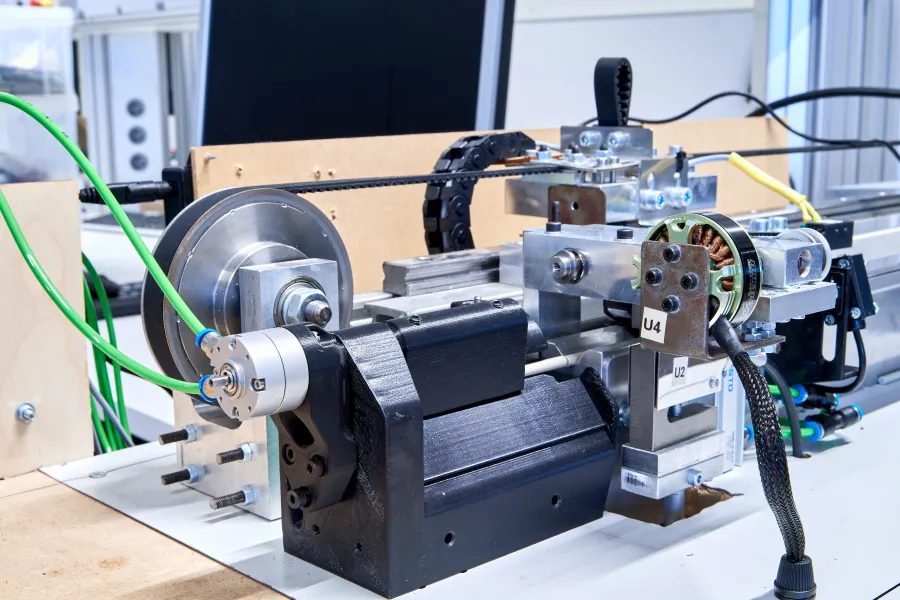
No two research projects are the same
There is no single answer to the question of how to write a good research funding application. After all, every research project and every situation is, of course, different. However, we can offer you some tips to bear in mind when writing your application. These are based on the experiences of the assessment panels.
Preparing your application
Nothing is as important as thorough preparation. This naturally starts with carefully reading through the call for proposals for the round to which you wish to apply. Always check with your university’s funding adviser as well. He or she has a great deal of experience with funding applications and can help you get started.
Assessment criteria
The criteria against which your application will be assessed vary from one scheme to another. You should therefore familiarise yourself in good time with the assessment criteria for the scheme to which you wish to apply. Involve colleagues from your university of applied sciences as well as professionals from the relevant sector (such as your prospective consortium partners) so that they can assist you with, for example, formulating your proposal or building a network.
We outline a number of criteria against which applications may be assessed. Please be aware that this overview is not exhaustive and that an assessment panel will always consider the interrelationship between the assessment criteria.
If you are submitting an application for funding for a research project via, for example, RAAK or KIEM, an assessment panel will want to know to what extent the research question originates from professionals in the field. Have they been consulted, and how were they consulted? Is the question supported by such a broad range of stakeholders that it can be said to have societal relevance? Is it clear that new knowledge is required to answer the question?
If the articulation of the research question is an assessment criterion, demonstrate in your application the process you have organised to identify the practical issue, who you have involved in this, and what insights have emerged from that process. Many applicants limit themselves to mentioning workshops or other meetings, but this does not provide the committee with sufficient insight into how the question is genuinely experienced in practice.
Networking
Do the consortium partners possess sufficient in-house expertise and practical knowledge to answer the research question? Does each partner have a clear role and task? How actively are they involved? Is there also a partner involved who is capable of widely disseminating and/or implementing the knowledge gained? These are the questions against which the assessment committee evaluates the ‘networking’ criterion. So ensure that your partners and their tasks are reflected in the work plan and the budget.
Research plan
A RAAK or KIEM application must include a research plan. Your research plan consists of various steps and/or work packages. Ensure a logical sequence. Explain and substantiate them. Keep the reader in mind: what you take for granted may raise questions for a committee member. Write your research plan in such a way that another researcher in your field could carry out your research exactly as you have conceived it.
A number of specific questions to bear in mind whilst writing:
- Research question
- How did you arrive at your research question from your practical question? What state-of-the-art knowledge did you use for this? Ensure you use recent literature.
- Aim and outcome
- What will your research contribute to, both now and in the medium term? Why is that important?
- Steps and/or work packages
- What steps will you take to achieve your objective? What exactly will you be doing within the work packages? And which parties from your network are involved in this? What research techniques will you use? And how will you analyse the data? Also clearly state what your test criteria are and how you have formulated them. If there are successive work packages, please also indicate how you plan to deal with, for example, disappointing results.
- SWOT analysis
- When carrying out the SWOT analysis, first ensure you fully understand what this entails. Clearly describe how you will manage risks.
- End users
- Are you working with end users, perhaps patients? Ensure that their role, or how you will involve them, is clearly reflected in your research plan.
Quality of the consortium
Through a scheme such as SPRONG, we encourage collaboration between research groups and strengthen the position of practice-oriented research. If you are submitting an application for SPRONG, the quality of the consortium is a key criterion: does the consortium possess the necessary expertise to make a relevant contribution to the intended societal issue? You should therefore demonstrate in your application how the consortium will draw on issues from the region in the coming years, and highlight any links with relevant initiatives.
Project management
Every application must include a project plan. In this plan, you should describe how the project organisation and project management will be structured. Ensure this is clear and comprehensive, with clearly defined roles and responsibilities for each position. This will enable the committee to form a clear picture of the project’s feasibility.
Budget
Take care when drawing up your budget. The budget must clearly state who from which organisation, in what role, will be working for how many hours. The assessment committee reviews the budget to ascertain whether the participating parties are actually listed in the budget and what their contribution is. This provides an indication of the partners’ level of involvement.
It is not uncommon for parties to be mentioned in the application but not included in the budget. The reverse also occurs. You should therefore always check that the budget is consistent with the application.
Writing tips
You don’t write on your own
You don’t write a good application on your own. Ask fellow researchers or the funding advisers at your university of applied sciences to help you. Your consortium partners from the professional world can also offer a fresh perspective on your proposal. Always surround yourself with a number of critical reviewers and ask them to assess your proposal against the criteria set out in the call for proposals.
Write concisely
Write in a concrete and concise manner. Our assessment panels regularly point out that the best research proposals are short and to the point. Writing concisely also forces you to get to the heart of the matter. Ask yourself how you would describe your research in a few sentences to a family member or friend at a birthday party.
Sometimes, essential information for the application is included in the annexes. The panel does not read annexes as thoroughly. Ensure that all essential information is included in the application itself and avoid submitting annexes.
Generative AI in the application process
Do you use AI models such as ChatGPT to write your application? When doing so, take the core values of the Code of Conduct for Scientific Integrity (honesty, diligence, transparency, independence and responsibility) as your guiding principles. You should therefore always check generated texts before including them in your application. Read more about the responsible use of generative AI in the assessment and application process in the NWO’s generative AI policy (January 2025).